
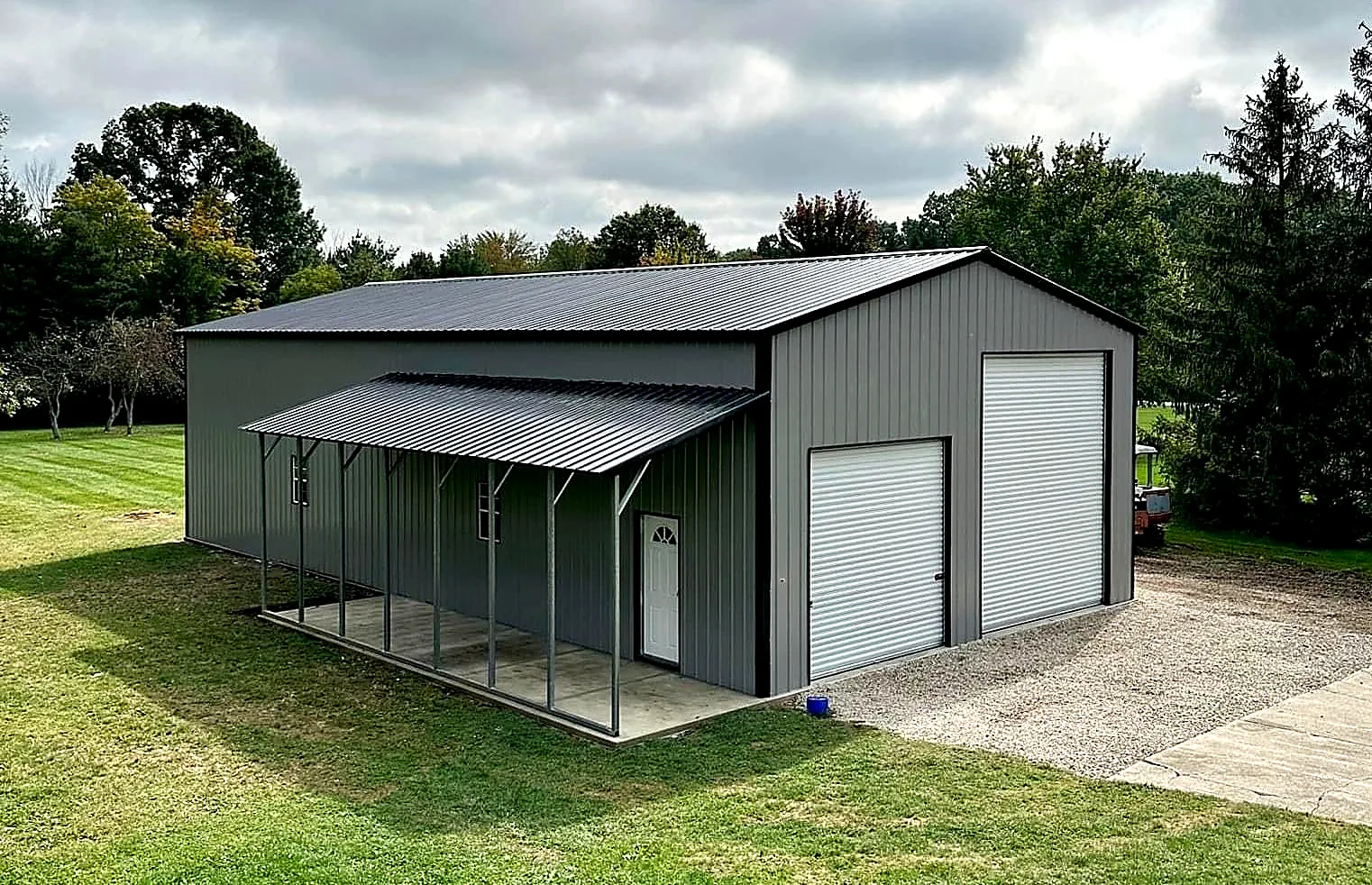
Steel buildings have a reputation for lasting, and it is well earned. Steel does not rot, it is not attractive to termites, and it does not burn the way wood framing does. But "how long" has no single answer. It depends on the materials, the climate and how the building is maintained.
The short answer
A properly engineered and installed steel building commonly lasts for decades. Many are still in use after thirty years or more, but exact life varies, and no honest company can promise a number for your site. Instead, look at the factors below.
What affects lifespan
Coatings and finish
Steel panels are galvanized and then painted. The coating protects against rust. Better coatings last longer, and the finish may eventually fade or chalk even when the steel is sound. Panel finish warranties are separate from structural warranties.
Climate and exposure
Coastal air, heavy road-salt use, industrial pollution and constant moisture are tougher on metal than dry inland conditions. In harsh areas, coatings and details matter more, and maintenance does too.
Frame strength and engineering
A frame designed for your wind and snow loads will stand up to your conditions. Thicker steel adds margin. See 12 gauge vs 14 gauge framing and permits and engineering.
Foundation and anchoring
A level, well-prepared base and correct anchoring protect the frame from movement, racking and moisture. Read about slab requirements.
Installation quality
The best materials do not help if the building is installed badly. Fasteners, flashing, sealant and bracing all need to be done right.
Maintenance
Light, regular care extends the life of any building.
A simple maintenance routine
Twice a year:
- Wash the panels with water and mild soap to remove dirt and salt
- Look for scratches or chips in the paint, and touch them up promptly
- Check that fasteners and trim are tight
- Clear gutters, valleys and the base of the walls of leaves and debris
After major storms:
- Inspect the roof, trim and doors for damage
- Look for any loosened panels or fasteners
As needed:
- Re-seal around penetrations and doors
- Keep soil, mulch and plants away from the base of the walls so moisture does not sit against the steel
- Manage condensation inside with ventilation and insulation, as described in how to stop condensation in a metal building
Steel vs other materials
| Topic | Steel | Wood-frame |
|---|---|---|
| Rot and termites | Not a concern | A recurring risk |
| Fire | Does not burn | Combustible |
| Routine upkeep | Washing, touch-ups | Painting, sealing, repairs |
| Weather | Engineered for local loads | Varies with design |
See our full comparison of metal buildings and pole barns.
What warranties usually cover
Metal building warranties typically address things like panel finish and structure, with different terms and conditions for each. They do not cover damage from storms, misuse, or lack of maintenance. Always read the exact terms for your building. Our warranty page explains how coverage works, and your specialist can provide the documents for your building.
Is it worth the investment?
Because steel buildings need less upkeep than many alternatives, and can last a long time, they often make sense for buyers who plan to keep the building for years. For a view of upfront price drivers, see how much a metal garage costs.
FAQ
Do metal buildings rust?
The steel is galvanized and painted to resist rust. Scratches that expose bare steel should be touched up. Coastal and wet environments need more attention.
Does a metal roof last longer than shingles?
Metal roofing often lasts longer than asphalt shingles, but the exact life depends on the coating and conditions.
Can I repaint a metal building?
Yes. Clean, prepare and use a coating made for metal. Ask your specialist for guidance on your panels.
Will my building survive a storm?
A building engineered for your wind and snow loads is designed to handle them. No building is storm-proof, so confirm the certification for your address.